

Replays
Executive summary
Leading Lightspeed's Strategic Shift
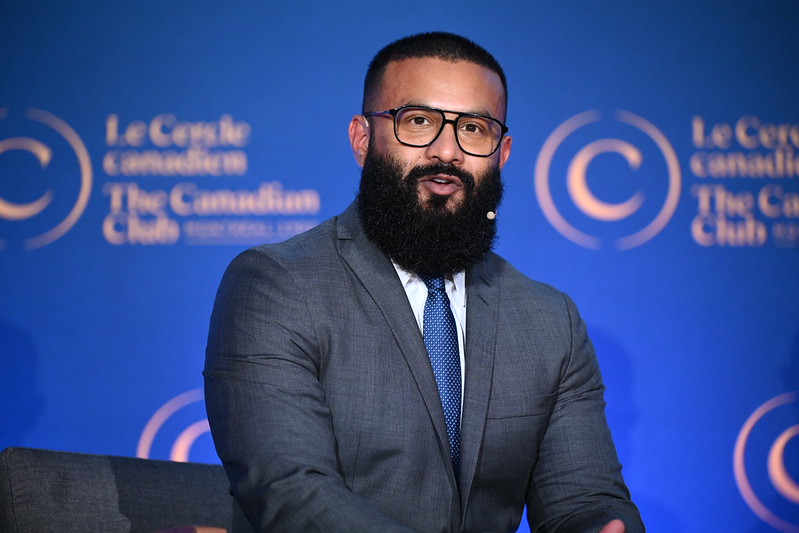
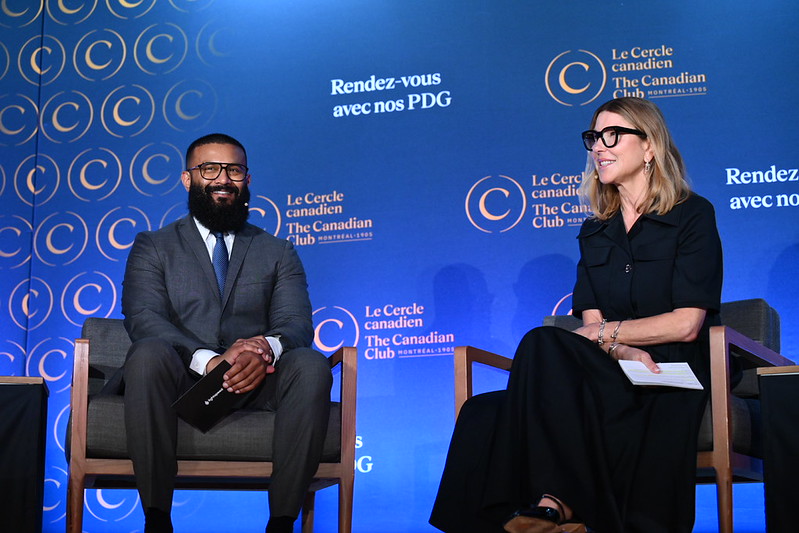
After several years of acquisition-driven growth, Lightspeed is now undertaking a major strategic refocusing. Back at the helm of the company since 2024, its founder, Dax Dasilva, is now emphasizing profitable growth, greater operational discipline and artificial intelligence (AI) as he prepares the next phase of development for the company, which specializes in cloud-based point-of-sale systems. Speaking at the Canadian Club of Montreal on June 8, he outlined this vision in a conversation moderated by Manon Brouillette, Chair of Lightspeed’s Board of Directors and Chair of Hydro-Québec’s Board of Directors. Two years after his return, the Montreal-based company reached an important milestone by generating nearly $20 million in adjusted free cash flow, a first in its history. For Dax Dasilva, this result reflects the progress made since the transformation began. He even described the current period as the “most exciting” in Lightspeed’s 21-year history. “It became essential to build a sustainable company capable of creating long-term value,” he explained. The first step was to conduct an in-depth review of the company’s business portfolio in order to identify the areas where it held a sustainable competitive advantage. This exercise led to the definition of two main growth engines: solutions for specialized retailers in North America and solutions for the restaurant industry in Europe.
Learn more
The End of the “Win Everywhere” Model
One of the most significant changes resulting from this transformation concerns Lightspeed’s international strategy. For several years, the company had attempted to adapt certain products to all global markets. This approach has been called into question. “We’ve stopped viewing certain products as prestige projects that we wanted to impose worldwide,” said Dax Dasilva.
The executive specifically cited the example of the platform designed for European restaurant owners, which stemmed from acquisitions made in Belgium, Germany, and Switzerland. Designed to address the realities of the European market, this solution was not necessarily suited to the U.S. context.
According to him, attempting to standardize products on a global scale risked diluting investments and slowing innovation. The company now favors a more targeted approach, focused on sectors where it already has a natural advantage.
“We’ve chosen to focus on markets where we have the best chance of succeeding,” the founder summarized.
Why AI Isn't Enough
Artificial intelligence played a major role in the discussion. While Dax Dasilva is enthusiastic about its potential, he cautioned organizations that expect automatic productivity gains.
“Many executives believe that simply providing AI tools to their employees will automatically lead to productivity gains. That’s not the case,” he argued.
According to him, AI first requires a reevaluation of internal processes and work methods. Companies must review their roles, responsibilities, and ways of operating before they can fully benefit from these new technologies.
Lightspeed applies this logic internally. The company already uses AI to improve certain functions related to sales, software development, and operations. It is also working to integrate digital agents into its solutions for retailers and restaurant owners.
“We envision a future where companies will have both human and digital employees. These agents will be able to perform certain administrative or analytical tasks, allowing employees to focus more on service, value creation, and customer relationships.”
A transformation that engages the teams
Despite the scale of the changes, Dax Dasilva says employee engagement has actually increased throughout the transformation. “It is probably the achievement I am most proud of,” he said.
Every three months, Lightspeed measures employee engagement through an internal survey. While this type of indicator often tends to decline during major organizational restructurings, the company has experienced the opposite. According to Dasilva, this improvement is largely due to the emphasis placed on communication and transparency throughout the process.
He has notably held numerous open question-and-answer sessions with employees across the company’s various offices. Discussions covered everything from the share price and restructuring to artificial intelligence and the objectives of the transformation. “People were able to ask the difficult questions,” he emphasized.
According to Dax Dasilva, teams also began to see the results of the various initiatives fairly quickly. Beyond the financial gains, these projects helped foster new collaborative habits across departments and strengthened the organization’s ability to execute complex initiatives at scale.
For the entrepreneur, this level of engagement is a critical element of Lightspeed’s next phase of development as the company continues to integrate AI into its operations and products.
“The teams are approaching this next stage with much more enthusiasm. The work remains demanding, but we have become stronger collectively,” he said.
Governance Aligned with Transformation
For Dax Dasilva, Lightspeed’s transformation also hinges on a governance structure tailored to the company’s current challenges. Still holding approximately 11% of the company’s shares, the CEO believes his interests are closely aligned with those of the other shareholders.
“We all want the same thing: to build a high-quality company and create sustainable value,” he said.
He also emphasized the importance of his close relationship with Manon Brouillette. With the company employing more than 3,000 people worldwide and needing to make strategic decisions quickly, collaboration between management and the board of directors is, in his view, a key factor for success.
Dax Dasilva also believes that Lightspeed now has a board of directors that is particularly well-suited to the phase the organization is currently going through. “We’ve assembled a board for this specific moment,” he explained. According to him, the directors were chosen for their ability to engage in difficult discussions, challenge certain assumptions, and support the company in making decisions that can sometimes be demanding.
Building for the Next 20 Years
Dax Dasilva sees this period as a return to the fundamentals that enabled Lightspeed to grow in its early days. “I feel like we’re getting back to basics. We’re starting to build for the long term again,” he said.
He believes the company now has strong assets in its key markets and is convinced that the combination of greater financial discipline, a more focused strategy, and artificial intelligence will enable Lightspeed to continue growing.
“Today, we are pursuing a very specific goal: to build a company capable of generating approximately $100 million in free cash flow. That is what will fully demonstrate the quality of the business model we are developing.”
“My ambition is to build a strong, sustainable company that creates value for the next twenty years and beyond,” he concluded.
We have stopped trying to sell a product all over the world and are instead marketing it where we have a real competitive advantage. »
Dax Dasilva
Go directly to the sections that interest you the most:
Biographie(s)
Dax Dasilva
Dax Dasilva is the creative mind behind Lightspeed Commerce. Founded in 2005, Lightspeed is the unified POS and payments platform for ambitious entrepreneurs to accelerate growth, provide the best customer experience and become a go-to destination in their space. It powers the world's best businesses in over 100 countries globally. Dasilva was reappointed as CEO on February 15, 2024. Prior to that, he served as Executive Chair of Lightspeed’s board of directors for two years, and previously led the company’s operations as Chief Executive Officer since its founding in 2005. Lightspeed employs over 3,000 staff worldwide and powers hundreds of thousands of customer locations worldwide. During Dasilva’s leadership as CEO, the company went public in March 2019 on the Toronto Stock Exchange under the symbol LSPD, becoming one of Canada’s top 10 technology IPOs. In September 2020, the company listed on the New York Stock Exchange. Lightspeed also undertook 9 acquisitions over the course of a four year period to consolidate the global market and launch two, best-in-class flagship products: Lightspeed Retail and Lightspeed Restaurant. Biography 2025
EVENT SPONSOR

INFORMATIONS
This conference took place on June 8, 2026, at the Fairmont The Queen Elizabeth in Montreal.
Major partner

Commanditaires de saison


Media partner


















Administrative Offices
1250 Boulevard René Lévesque West, suite 2200
Montréal (Québec) H3B 4W8


Principal Partner

Season Sponsors


Privacy Policy - © Canadian Club of Montreal Année - Website by Riposte
