
Replays
Executive summary
Economic Reconciliation: First Nations Want More Than a Share of the Benefits
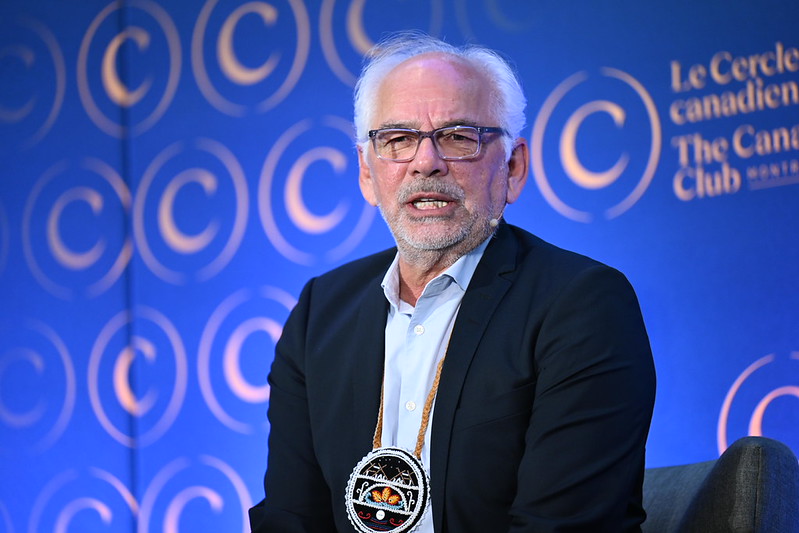
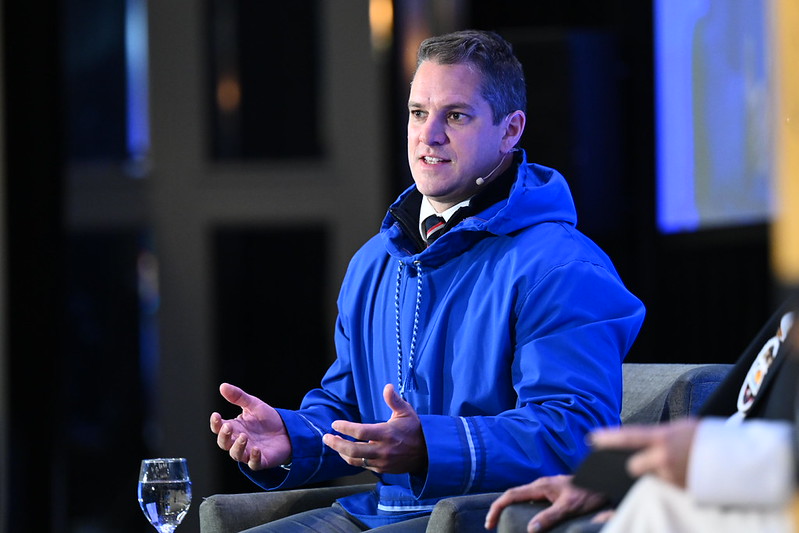
First Nations no longer want to be merely consulted on projects developed on their territories. They want to participate in decision-making, invest, and own assets. Although relationships with the business community have evolved considerably, access to capital and the sharing of decision-making power remain significant obstacles to meaningful economic reconciliation. This was a central message of a panel discussion hosted by the Canadian Club of Montreal, featuring Ghislain Picard, Associate Professor at HEC Montréal’s First Nations Executive Education School and former Chief of the Assembly of First Nations Quebec-Labrador (AFNQL), and Jean-François Verret, Chief Executive Officer of Raglan Mine. The discussion was moderated by Anne-Marie Ethier, Audit Partner and Board Member at Deloitte Canada and Chile, who is also a member of the Kitigan Zibi Anishinabeg First Nation. For her, economic reconciliation must enable First Nations to define their own ambitions and have the resources needed to achieve them. “How can we build lasting economic partnerships that create real value for future generations?” she asked the panellists.
Learn more
Thirty Years of Progress
To illustrate how far things have come, Ghislain Picard recalled the 1996 Summit on the Economy and Employment, organized by the government of Lucien Bouchard. Invited to a meeting attended by approximately 75 representatives from the business community, financial institutions, and civil society, he remembered the sense of exclusion he and another Indigenous representative experienced.
“We felt as though we were light-years away from what was happening around us economically,” he recalled.
Thirty years later, the situation has changed considerably, he observed. In his view, the strong turnout from the business community at the Canadian Club's panel discussion reflects that progress. “I'm not sure a topic like this would have attracted so many people 25 years ago.”
Relationships have evolved significantly in the mining sector in particular. About 15 years ago, discussions focused primarily on Impact and Benefit Agreements (IBAs), which allow communities to share in some of the economic benefits generated by projects. Today, their ambitions extend much further. “Communities want to own projects,” Ghislain Picard stated. However, access to capital remains a major barrier to achieving that goal.
He recalled that a proposal to allow First Nations to become shareholders in certain Hydro-Québec facilities located on their territories had been rejected. With major energy projects being considered for the coming decades, the question remains: “Should we reconsider what we mean by an equal partnership?”
Building Together
For Jean-François Verret, a genuine partnership begins long before an agreement is signed. He pointed to the example of Raglan Mine, whose agreement with Inuit communities was ratified in 1995 following several years of discussions.
This collaboration made it possible to incorporate Inuit knowledge into the project's design. “We need to involve communities as early as possible in the process so that we can build the project together,” he explained.
He criticized the practice of presenting communities with fully developed projects, accompanied by 1,200-page impact assessments, and then asking them to reach a decision within a few months. “That's not how you build something together.”
The Raglan Agreement represented a significant step forward, but it should not become a fixed model. “Should what was signed in 1995 represent our ceiling? Absolutely not. We need to keep innovating.”
Verret also emphasized the distinction between an agreement and a lasting partnership. “An agreement is a document you sign. A relationship is something you live every day.” Building that relationship requires an ongoing presence in the community, a willingness to listen, and a genuine commitment to understanding its concerns.
Taking the Long View
This responsibility extends well beyond the end of industrial operations. Raglan Mine, where operations could continue until at least 2060, has already established a committee to plan for the site's eventual closure and rehabilitation.
“Nothing in our agreement required us to do this. But we need to start now because the communities are the ones who will continue living on the land,” explained Jean-François Verret.
The objective is not only to preserve the project's economic benefits, but also to protect the ways of life and culture of Inuit communities.
For Ghislain Picard, this approach illustrates the progress made by the industry. He recalled the damage left behind by certain mining operations in the 1950s, particularly in Schefferville. “If we had approached things this way back then, communities would probably have had a very different experience.”
Developing the Next Generation of Leaders
Economic self-determination, however, does not depend solely on access to capital. Management, negotiation, and governance skills are equally important.
Ghislain Picard highlighted the role of HEC Montréal's First Nations Executive Education School in strengthening these capabilities. He pointed in particular to the launch of a new program for Indigenous youth aged 18 to 35, whose latest cohort had recently begun its training on the traditional territory of the Atikamekw Nation.
Picard himself is scheduled to teach a course covering the history of the past 60 years, helping future leaders better understand the events that continue to shape the realities of their communities today.
Ghislain Picard also emphasized the significant participation of women in these programs. Over nearly five years, approximately 70% of the certificates awarded by the school have gone to women.
The ultimate objective, he reiterated, is to strengthen the skills needed to support First Nations' self-determination.
Jean-François Verret has also witnessed the emergence of a new generation of Indigenous leaders in the mining sector. He cited the example of an Inuit employee who began his career working underground through a training program and is now part of the management team.
Listening Above All
Asked what Quebec business leaders should change in the way they collaborate with Indigenous communities, both panellists emphasized humility and the importance of listening.
Jean-François Verret also called for patience. “We live in a world where everyone wants immediate results. You can't force a relationship,” he said. He also stressed that those responsible for community relations should have a seat at the decision-making table.
Ghislain Picard, for his part, called on the business community to become more actively involved. He referred to an Indigenous tradition in which chiefs pass a blanket around, inviting everyone to make a contribution.
He also urged governments to recognize the significance of the United Nations Declaration on the Rights of Indigenous Peoples, which he described as a “foundational” document.
“The doors are wide open. There's still room at the table,” he assured the audience.
Indigenous communities want to benefit from the development projects carried out on their territory and to participate in them as stakeholders. However, there are many obstacles standing in our way. We need to reevaluate our strategies to build a partnership on an equal footing. That is the challenge before us. »
Ghislain Picard
Go directly to the sections that interest you the most:
- Mot de bienvenue
- Évolution historique des relations économiques
- Accès au capital et co-construction des projets
- État, gouvernance &réhabilitation environnementale
- Capital humain, leadership et relève
- Posture de l'industrie et ententes évolutives
- Autodétermination et richesse intergénérationnelle
- Recommandations pour accélérer la réconciliation
- Mot de clôture
Biographie(s)
Ghislain Picard
An Innu from the community of Pessamit on Quebec’s North Shore, Ghislain Picard served as Chief of the Assembly of First Nations Quebec-Labrador (AFNQL) from 1992 to 2025. The AFNQL represents 10 Nations across 43 communities spread over a vast territory.
Before his political career with the AFNQL, Ghislain Picard held various positions within organizations representing Indigenous communities, notably with the Atikamekw and Montagnais Council. In the 1980s, he was one of the founders of the Atikamekw-Montagnais Communication Society (SOCAM), an organization dedicated to broadcasting programs in Indigenous languages.
Since 2021, he has chaired the Board of Directors of the McCord Stewart Museum and the Advisory Committee of the First Nations Executive Education School (EDPN). He is also co-author of the book From Kebec to Quebec: Five Centuries of Exchanges Between Us, written in collaboration with Denis Bouchard and Éric Cardinal.
Among the distinctions he has received throughout his career are:
• Knight of the National Order of Quebec (2003)
• Knight of the French Legion of Honour (2005)
• Honorary Citizen of the City of Montreal (2017)
• Honorary Doctorate from the Université du Québec à Montréal (UQAM) (2021)
• Honorary Doctorate from the Université du Québec (2025)
Jean-François Verret
Having been with Raglan Mine since 2010, Jean François Verret was appointed head of operations in April 2024. A mining and geological engineering graduate from Polytechnique Montréal, he is recognized for his strategic vision and his ability to deliver high-value, forward-thinking projects. His leadership notably enabled the completion of major initiatives in mining development, energy transition, and partnership with Inuit communities, helping position Raglan Mine as a model of sustainable development in the Canadian North.
Anne-Marie Ethier
Anne-Marie Ethier, FCPA is an Audit Partner at Deloitte, a member of the Deloitte Canada and Chile Board, and proud member of the Kitigan Zibi Anishinabeg First Nation. With more than 30 years of experience serving public sector, municipal, private, and not-for-profit organizations, she is recognized for her leadership in governance, audit, and risk oversight. A strong advocate for economic reconciliation, she is committed to advancing Indigenous economic participation and governance excellence across Canada.
EVENT SPONSOR

INFORMATIONS
This conference took place on October 19, 2026, at the Sheraton Montreal Center.
Major partner

Commanditaires de saison


Media partner
















Administrative Offices
1250 Boulevard René Lévesque West, suite 2200
Montréal (Québec) H3B 4W8


Principal Partner

Season Sponsors


Privacy Policy - © Canadian Club of Montreal Année - Website by Riposte
