

Replays
Executive summary
Canadian AI is making its mark
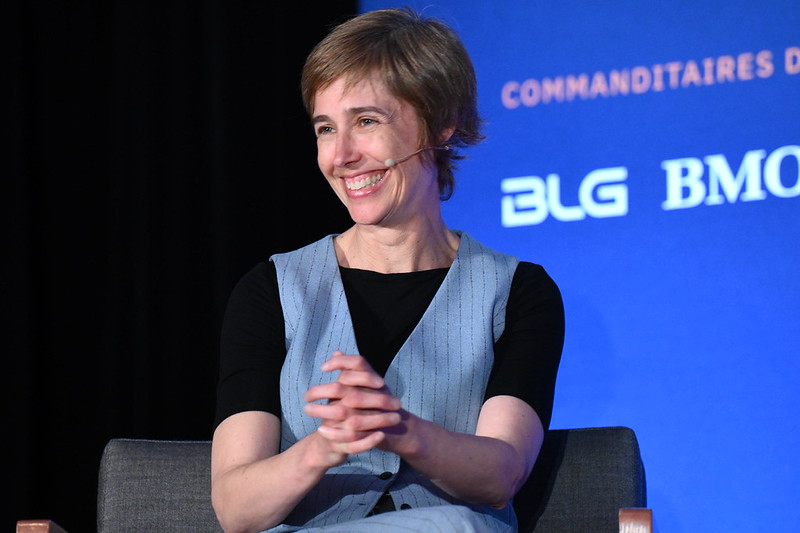
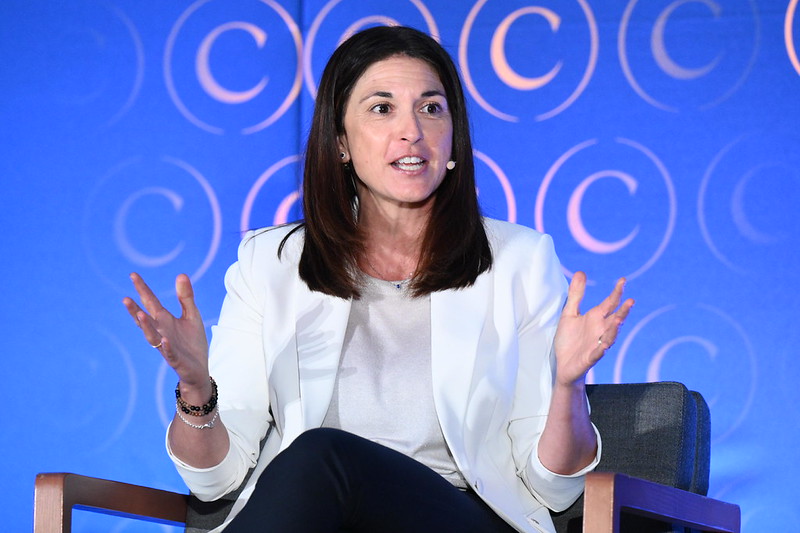
As global competition in artificial intelligence (AI) intensifies, Montreal is seeking to champion an approach that differs from that of the American and Chinese tech giants. Speaking before members of the Canadian Club of Montreal on May 27, Valérie Pisano, President and Chief Executive Officer of Mila – Quebec AI Institute, and Joëlle Pineau, Chief AI Officer at Cohere, called for AI that is more deeply rooted in cultural realities, more responsible and, above all, more effectively commercialized. The panel, moderated by Bruno Guglielminetti, opened with the announcement of a strategic partnership between Mila and Cohere aimed at developing language models adapted to the Quebec and French-Canadian context. According to the two executives, the initiative reflects the shift Canada’s AI ecosystem is trying to make: turning its scientific leadership into tangible economic benefits. “Cohere and Mila have already been working together for several years,” Joëlle Pineau explained. She noted that the recent opening of a Cohere office in Montreal has led to more frequent exchanges between the two organizations. “This is an opportunity to formalize, in a more official and structured way, what we are going to do together,” she added, referring to the partnership, which is intended in particular to develop language technologies adapted “to the realities of the language, culture and Quebec and French-Canadian context.” “Cohere is one of only two companies outside the United States and China that train models with advanced AI capabilities, and it is a Canadian company,” Valérie Pisano noted. In her view, Canada now has an ecosystem mature enough to play a strategic role on the global stage.
Learn more
AI Designed for Quebec
For Joëlle Pineau, the challenge goes far beyond simple linguistic translation. The models developed jointly by Cohere and Mila will need to understand not only Quebec’s cultural references but also the administrative and social realities specific to Quebec.
She gave the example of a model deployed in government services. “The way people file their taxes in Quebec is not the same as in the United States or Europe,” she explained. “The reasoning of government agents must be adapted to how society functions.”
Valérie Pisano went even further by describing language as “the operating system of humans.” In a world where AI tools increasingly rely on language, she believes it is essential that Quebecers be able to interact with these technologies within their own cultural context.
“It is fundamental that we be able to continue operating in our own language and not be forced to rely on mechanisms defined by other cultures,” she argued.
The Montreal Model Takes on the Giants
According to the two executives, Montreal enjoys a unique position in the field of AI. Not only does the city have a large pool of researchers, but it also offers a more human-centered approach than the one often associated with Silicon Valley.
Valérie Pisano even compared local AI leaders to the “Céline Dions of artificial intelligence,” citing Yoshua Bengio, Hugo Larochelle, and Joëlle Pineau in particular.
“We don’t pretend to have talent—we actually have it,” she said. “And we do it differently. Here, we don’t subscribe to the ‘move fast and break things’ philosophy.”
This more “sociotechnological” approach, as she put it, is also attracting foreign delegations seeking an alternative to dominant American models.
Joëlle Pineau also believes that Cohere’s decision to develop AI primarily for businesses and governments allows the company to remain grounded in practical applications.
“We’re in an era where there’s a lot of hyperbole surrounding AI,” she explained. “In most cases, it doesn’t yet fully meet people’s needs. So I find it interesting to be immersed in real-world problems rather than thinking we’ve invented some magic solution that will fix everything.”
The Shift in Marketing
Long recognized for its academic research, Canada has often been criticized for its difficulty in turning discoveries into strong, successful companies. The two speakers, however, believe that a cultural shift is now underway.
Valérie Pisano notably emphasized the emergence of the “researcher-entrepreneur,” a profile that Mila is now seeking to support more actively through various programs, including the Venture Scientist Fund, created through a partnership between Mila and Inovia Capital.
“Researchers now want to take their work and bring it into the real world,” she explained. “They want to build their own companies around their values and priorities.”
The challenge also lies in retaining talent in an environment where American companies have considerable financial resources. “We cannot take this for granted,” Valérie Pisano warned. “We need to invest, build bridges and create projects. We have to go all in.”
For her part, Joëlle Pineau believes that Montreal still has several competitive advantages despite salaries that are sometimes lower than in the United States. “People come for the right reasons,” she said. “They want to be part of something meaningful and live in a city where they actually want to stay.”
She acknowledged, however, that immigration policies can still create obstacles when it comes to recruiting certain international talent.
Cohere’s rapid expansion also illustrates Canada’s ambition to move from the laboratory to the global market. Founded in 2019, the company now has offices in Toronto, Montreal, San Francisco, New York, London and Paris. It has also recently announced strategic acquisitions in Germany.
According to Joëlle Pineau, this growth is driven in particular by three factors: data security, technological sovereignty and cost control. “Many companies and governments are looking for solutions that allow them to keep their data locally and reduce their dependence on American technologies,” she explained.
The costs associated with the large-scale use of major American models are also becoming a significant issue for many organizations. “Token costs [the units of data processed by AI models] can quickly get out of hand,” she noted, adding that Cohere is working to develop models that are more efficient and less expensive to deploy.
Digital Sovereignty: A Strategic Issue
The issue of digital sovereignty dominated much of the discussion. When asked whether Canada could become fully sovereign in this regard, Valérie Pisano replied immediately: “Completely? No. Nor do I think that’s necessary or desirable. But there are areas where Canada must not compromise. ”
Instead, she believes Canada should help forge a “third way” by allying with other middle powers—such as Germany, Japan, Singapore, or the Nordic countries—to offer an alternative to the U.S.-China duopoly.
Joëlle Pineau, for her part, prefers to define sovereignty as a matter of autonomy and control. “Do we control access to this technology? To our data centers? Are we able to choose our own models?” she listed. “That’s what a sovereignty strategy is.”
A Call to Action and Agility
Beyond technological considerations, the two speakers issued a warning to leaders: inaction now risks costing more than a bad decision.
Joëlle Pineau drew a parallel with the consultations Ottawa is conducting on its future national strategy for artificial intelligence. According to her, many organizations fall into the trap of wanting to wait for the perfect plan before taking action. “There won’t be a perfect strategy,” she stated. “Just having one and moving forward is what matters most.”
Valérie Pisano, for her part, believes that companies will need to thoroughly rethink how they manage change. Traditional decision-making cycles will no longer suffice in an environment where technologies evolve from one month to the next.
“We normally prefer to do very thorough work, reach a conclusion, and then execute the plan,” she explained. “But AI won’t allow us to do that. We’ll have to learn to test, adjust, start over, and accept a certain amount of discomfort.”
The message is clear: while organizations are still hesitating, global competition is moving forward rapidly.
We have the Céline Dions of AI—and we’ll be the last to realize that Yoshua Bengio, Hugo Larochelle, and Joëlle Pineau are the Céline Dions of AI. But when they travel around the world, they meet with heads of state and corporate CEOs, and they advise on strategies for adopting these technologies. »
Valérie Pisano
Go directly to the sections that interest you the most:
- Mot de bienvenue
- Collaboration Mila–Cohere : IA locale
- Identité montréalaise et le virage vers le produit
- De la recherche académique à l'entrepreneuriat
- Cohere sur l'échiquier mondial
- Stratégie nationale & agilité face à l'incertitude
- Talents et défis de la propriété intellectuelle
- Vers une souveraineté numérique
- Mot de la fin
Biographie(s)
Joëlle Pineau
Joëlle Pineau is Chief AI Officer at Cohere. She plays a key role in the company's product strategy and oversees Cohere Labs, Cohere's research lab. She is also a professor at McGill University and a core academic member of Mila. Prior to Cohere, she was VP AI research at Meta, leading its Fundamental AI Research (FAIR) team. Based in Montreal, she holds a BASc in Engineering from the University of Waterloo, and an MSc and PhD in Robotics from Carnegie Mellon University.
Valérie Pisano
Valérie Pisano is the President and CEO of Mila. A prominent leader in Canada’s artificial intelligence landscape, she is recognized for her strategic vision and transformational leadership. With over 20 years of experience in growth management, she notably served as Chief Talent Officer at Cirque du Soleil and co-founded the Mobïus project on bias to accelerate the dialogue on female leadership in the corporate world.
Since 2018, she has led Mila, the world’s largest academic research center in deep learning, founded by Professor Yoshua Bengio, the world's most cited researcher and recipient of the AM Turing Award. Under her leadership, the Institute has experienced exponential growth, establishing itself as a pillar of the Canadian AI ecosystem with a reach that extends far beyond national borders. Today, Mila boasts a community of over 1,500 researchers and 150 industrial partners, and stands as a global benchmark for AI governance, notably through key collaborations with the OECD and the United Nations.
As a former consultant with McKinsey Canada, she focuses on how humans can adapt to and benefit from this technological revolution. She holds a degree in Finance and Economics from HEC Montréal and currently serves on the boards of directors of LawZero, Chartwell, and Énergir.
EVENT SPONSOR

INFORMATIONS
This conference took place on May 27, 2026, at the Fairmont The Queen Elizabeth in Montreal.
Major partner

Commanditaires de saison


Media partner


















Administrative Offices
1250 Boulevard René Lévesque West, suite 2200
Montréal (Québec) H3B 4W8


Principal Partner

Season Sponsors


Privacy Policy - © Canadian Club of Montreal Année - Website by Riposte
